Religious Education at RCFS
At Roehampton Church Forest School, Religious Education is not just a subject on the timetable — it is part of the heartbeat of our school.
Rooted in our Christian vision, “How good and pleasant it is when God’s people live together in unity” — Psalm 133:1 — RE helps our children understand what it means to live with kindness, courage, responsibility and love. It supports our whole-school aim of Nurturing Individuality, Growing Together and Embracing Community, enabling every child to flourish.
As a Church of England school, we follow the Southwark Diocesan Board of Education RE syllabus, thoughtfully adapted to reflect who we are - a diverse, inclusive community where faith, reflection and our forest school are deeply connected.
At RCFS, children do not simply learn about religion — they learn from it.
They explore big questions about God, creation, justice, forgiveness, identity and purpose. They are encouraged to reflect deeply on their own beliefs and values, developing a strong moral compass rooted in our Christian ethos.
Deep Thinking at the Heart
A distinctive feature of RE at Roehampton is our commitment to deep thinking.
Children are regularly given time and space to reflect, question and respond to big ideas. Through our Deep Thinker books, pupils capture their thoughts, wondering and reflections - creating a personal journey of spiritual and philosophical growth over time.
These moments are not rushed or prescribed. They allow children to:
- Ask meaningful questions
- Explore their own beliefs and ideas
- Respond thoughtfully to the beliefs of others
- Develop confidence in expressing what matters to them
This culture of reflection ensures that learning is not just remembered, it is experienced and lived.
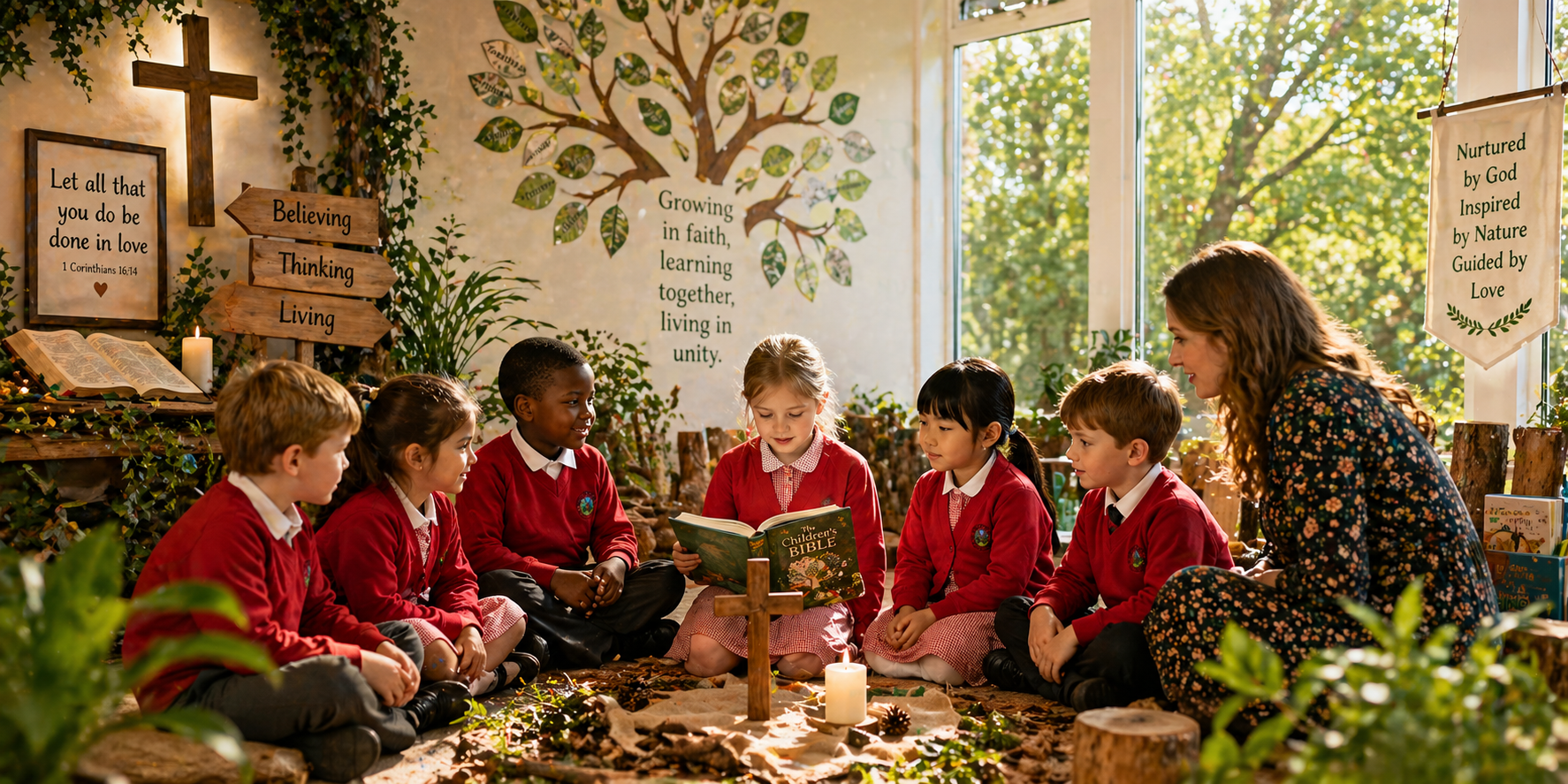
Believing, Thinking, Living
Our RE curriculum is built around three golden threads:
- Believing – understanding what people believe
- Thinking – asking deep and challenging questions
- Living – exploring how beliefs shape actions and lives
These threads are woven through every lesson, allowing children to engage with religion in a way that is thoughtful, balanced and meaningful.
A Living Connection with Worship
RE is closely connected to our daily Collective Worship, creating a seamless spiritual journey for our pupils.
Each week, children gather to reflect, sing, pray and explore Christian values together. On Wednesdays, worship at Holy Trinity Church allows children to read from the Bible, lead prayers and reflect on their meaning alongside Father Joshua.
In class, children revisit these ideas through discussion and Deep Thinker tasks, deepening their understanding and making personal connections to their own lives.
Spiritual Development Through Experience
Our forest school gives RE a truly unique dimension.
In nature, children encounter awe, wonder and stillness - moments that encourage reflection on creation, life and their place in the world. These experiences help children develop a personal spirituality that is authentic and meaningful.
We intentionally create opportunities for pupils to:
- Pause and reflect
- Experience wonder and curiosity
- Consider life’s big questions
- Develop their own sense of belief and identity
As our Collective Worship vision states, we foster “a growing awareness and appreciation of awe and wonder in all aspects of what we do.”
Shaping Character and Values
RE plays a central role in developing the values we live by every day by being responsible, caring, fearless and secure.
Through RE, children learn to:
- Show respect and empathy
- Value diversity and difference
- Reflect on right and wrong
- Understand their responsibility to others and the world
They begin to understand that beliefs influence actions and that they can choose to live in ways that make a positive difference.
A Living Faith
Our children do not simply learn about religion, they learn from it and they live it.
They leave Roehampton as thoughtful, reflective individuals who are able to engage with the world with openness, integrity, and compassion. They understand the importance of living well together, guided by strong values and a deep sense of purpose.
At Roehampton Church Forest School, Religious Education is more than a curriculum subject.
It is the foundation upon which we nurture hearts, inspire minds, and shape lives.